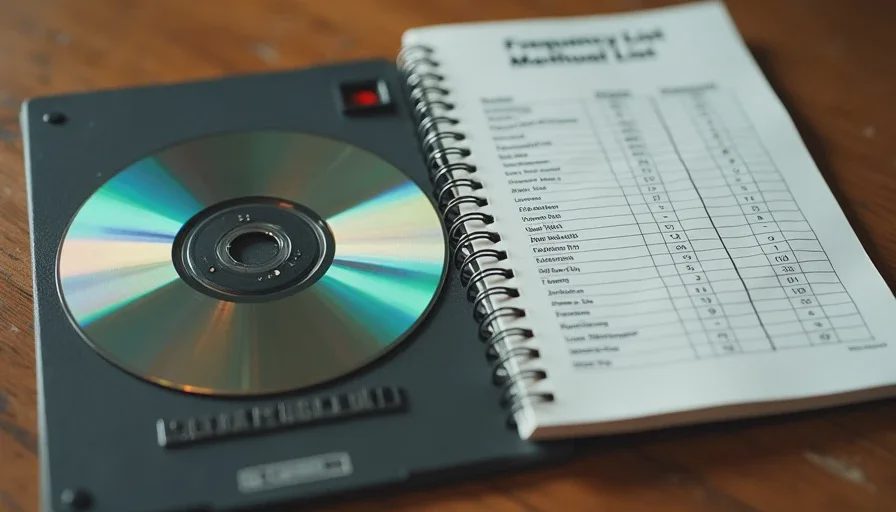
I replayed the original Metal Gear Solid on a series of quiet evenings, using a disc that still carried the original case art and a manual that treated the codec frequency list as essential equipment. The question was not whether the cutscenes still ran long. The question was whether the game still understood the value of silence and withheld information. It does. That understanding is rarer than the technical achievements that once defined it.
Some games don’t age well. Some just wait for you to catch up. Metal Gear Solid waited for a design culture that talks more and listens less. What remains useful is its willingness to let corridors stay quiet, to let the player hold a position without constant audio commentary, and to treat the absence of noise as a form of pressure.
What the Quiet Still Does
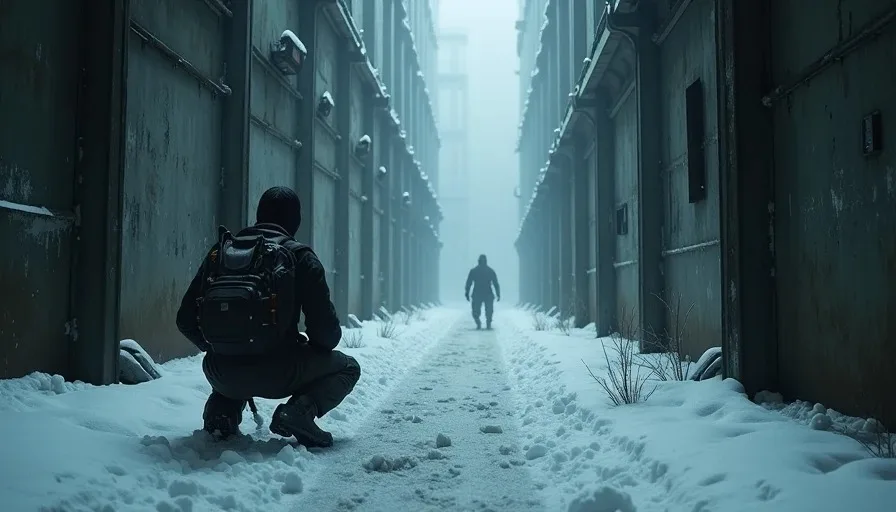
Modern stealth and cinematic games often fill every pause. Audio logs, companion chatter, objective reminders, and environmental storytelling that never stops explaining—all of it keeps the player oriented and the runtime dense. Metal Gear Solid, for all its own talkative sequences, still knows how to stop talking. The vents, the snowfields, and the long approaches to a guard’s back are allowed to remain sparse. That sparseness is the design.
Practical Contrasts
Element | Metal Gear Solid (1998) | Common Modern Pattern |
|---|---|---|
Approach sequences | Long, quiet, player-driven | Often shortened or filled with banter |
Information delivery | Codec calls as discrete events | Continuous HUD and audio guidance |
Failure state | Alert, search, reset of position | Frequent checkpoints, soft fails |
Spatial tension | Built from sightlines and sound | Built from scripted encounters and markers |
Silence | Used as pressure | Often treated as empty space to fill |
The table is not a claim that the original is quieter in every minute. It is a claim that the quiet stretches are intentional and still functional. When the game stops explaining, the player has to supply the attention. That demand is part of why the second play still feels active rather than archival.
Replaying the Structure, Not the Spectacle
The cutscenes remain long. The voice acting remains theatrical. Those surfaces have not become more subtle. What has become clearer is the underlying rhythm: talk, then movement; exposition, then a stretch where the only feedback is the radar and the sound of footsteps. The game trusts the player to inhabit the quiet without constant reassurance. That trust is the part that still works.
I drafted the notes after a session that ended in a snowfield approach I had failed three times. The legal pad was in the bag from the weekend thrift loop. The question at the top of the page was whether the silence still produced tension once the novelty of the original presentation had faded. The answer was the same held breath in the corridor, the same calculation of a guard’s turning radius, the same relief when the codec finally stayed quiet.
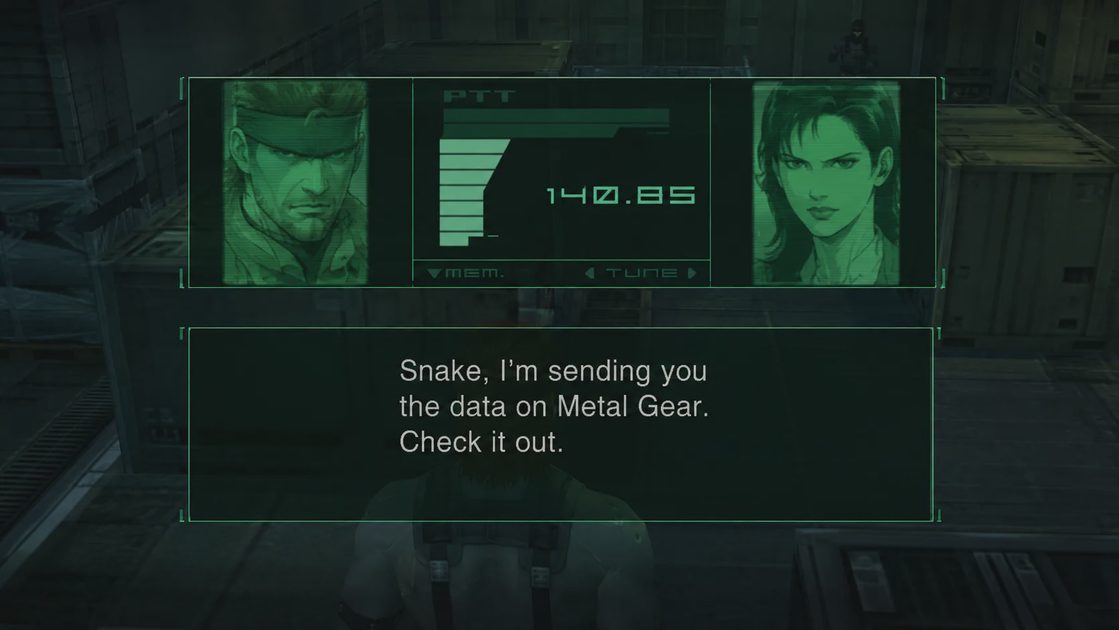
The codec calls are discrete events, not a constant companion track. When they end, the corridor returns to radar blips and footsteps. That return is the design working. Modern stealth and cinematic games often keep a voice in your ear for orientation and flavor. The orientation is helpful. The cost is that silence stops being available as a tool. Metal Gear Solid still treats silence as available. The second play makes that treatment easier to notice because the plot surprises are gone and the spatial ones remain.
I drafted the longer notes after a failed snowfield approach that I had to reset twice. The failure was ordinary. The quiet before the next attempt was the part that still felt current. No objective marker told me where to stand. No companion reminded me of the plan. The game waited. That waiting is what I mean by knowing when to shut up, and it is still rarer than the technical achievements that once defined the title.
The second play also makes the alert system easier to appreciate as a spatial language rather than a failure state to be avoided at all costs. When the guards search and then settle, the corridor returns to a usable quiet. That return is part of the rhythm. Modern designs often punish failure with longer resets or denser information. Metal Gear Solid resets the position and then trusts you to try the same space again with better timing. The trust is quiet. It matches the rest of the game’s willingness to stop explaining.
Who This Replay Is For
If you need constant narrative density and seamless modern stealth tools, the original will feel slow and mechanical. If you want a game that still treats silence as a resource and a form of pressure, it remains one of the clearest examples. The spectacle has been repeated and improved. The willingness to shut up has not been as widely copied.
Some games don’t age well. Some just wait for you to catch up. Metal Gear Solid waited for a design culture that filled every pause. When you return to it now, the pauses are still there, and they still do the work.