There was a time when a movie license on a game box felt like a promise. You saw the familiar logo, recognized the actors or characters, and imagined that the adventure might continue after the theater lights came up. fox interactive games occupied that particular stretch of the 1990s and early 2000s, when studios were eager to turn their properties into playable souvenirs. Some were rough. Some were surprisingly clever. A few still have a pulse beneath the dust.
What Fox Interactive actually was
fox interactive games were generally published under Fox Interactive, a label connected to 20th Century Fox rather than a single development team with one consistent house style. That distinction matters. The company’s releases came from different developers, covered several platforms, and ranged from ambitious action games to hurried tie-ins. The Fox name provided the doorway, but the people making each game determined whether the room was worth entering.
The catalog is easiest to understand as a snapshot of an industry learning how to handle licensed entertainment. A film studio could provide recognizable characters, music, and settings, but none of that automatically produced good controls or a satisfying campaign. In the best cases, Fox gave developers room to build something with its own identity. In the weaker cases, the license did most of the talking while the game stood quietly behind it.
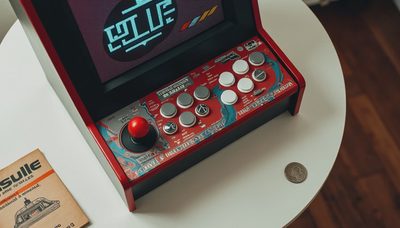
That unevenness is part of the appeal now. Looking through fox interactive games feels less like browsing a polished franchise archive and more like opening a box from a thrift store shelf. There are manuals with slightly yellowed pages, discs with rental stickers, and titles that seemed important for one season before disappearing entirely.
The games that made the label memorable
If you are exploring fox interactive games for the first time, Die Hard Trilogy is the natural place to begin. Released for the original PlayStation, it split one license into three distinct styles: third-person shooting, driving, and light-gun-inspired action. That structure was not perfectly balanced, but it had the energy of someone emptying an entire arcade into one disc. The driving sections in particular captured the reckless, cinematic mood that many licensed games only advertised.
The X-Files Game took a slower route. It leaned into investigation, live-action footage, and the uneasy rhythm of watching evidence accumulate. It was not a fast game, and its dated interface can test modern patience, but the format made sense for the material. Alien: Resurrection aimed for something more severe, using a first-person perspective and a darker atmosphere. Its history is complicated by development changes and the expectations attached to the Alien name, yet it remains an interesting example of a film license reaching toward a more serious game identity.
The Simpsons Wrestling belongs to a different shelf entirely. It is broad, noisy, and unmistakably tied to the era when almost any popular animated property could become a fighting or sports game. It has more value as a time capsule than as a competitive wrestling experience, but that is not an insult. Sometimes a game preserves the shape of a moment better than a documentary does.
Why these games feel different now
The appeal of fox interactive games is not simply nostalgia for old hardware. It comes from the gap between what these games promised and what they could actually deliver. A late-90s console had limited storage, awkward cameras, and controllers that demanded patience. Developers had to translate a movie’s scale into a few levels, a handful of mechanics, and a save system that might punish you for forgetting a memory card.
That pressure produced strange decisions. A game might include a recognizable voice, then send you through repetitive corridors. It might recreate a famous vehicle, then make driving it feel like steering a shopping cart with one bad wheel. Yet those compromises also gave the games personality. They were not endless updates or carefully managed content ecosystems. They were finished objects, sealed in plastic, waiting on a rental store shelf or under a Christmas tree.
When I replay fox interactive games today, I notice the pauses as much as the action. There is time to read the manual, look at the back cover, and wonder who decided that this particular property needed a video game. That slower context changes the experience. The question is no longer whether the game matches the movie perfectly. It is whether the adaptation found one good idea and followed it far enough.

How to revisit the catalog without forcing it
A second play works best when you choose the right expectation. Do not begin with the assumption that every old license deserves a full completion run. Start with one evening and a clear purpose. Die Hard Trilogy is useful if you want immediate variety. The X-Files Game fits a rainy night when atmosphere matters more than speed. A Simpsons title can work as a short visit to a particular version of television culture, especially if you are willing to laugh at the rough edges.
Original hardware gives these games their intended texture, but it is not essential for every player. A PlayStation, compatible display, and a clean disc can make the experience feel wonderfully direct. Emulation can also be practical when supported by legally obtained copies and accurate settings. The important thing is to avoid sanding away the context. These games were designed around loading screens, limited lives, fixed cameras, and physical media. Those inconveniences are part of what you are examining.
Before buying, inspect the disc surface, case hinges, manual, and regional compatibility. Prices can vary widely depending on condition, but common copies often remain affordable compared with major collector releases. The expensive listing is not automatically the better experience. A complete manual and a readable disc matter more than a seller’s dramatic description of rarity.
What remains after the license fades
The lasting value of fox interactive games is found in their unfinished edges. They show publishers testing the borders between cinema, television, comics, and interactive play. Sometimes the result is clumsy, but clumsy experiments can be more revealing than seamless products. They tell us what people hoped games could become before every franchise was planned across a dozen connected releases.
Some games don’t age well. Some just wait for you to catch up. Fox Interactive’s catalog contains both kinds, often on the same shelf. Revisit it slowly, with a used controller, a notebook, and no obligation to pretend that memory is the same as quality. The best reward is not discovering that every old game was secretly brilliant. It is finding one that still gives the room a particular feeling when the opening music starts.