Every thrift loop through eastern Iowa produces the same surplus: sports games. Football, basketball, baseball, racing, golf—often still in their cases, sometimes with the manual, almost always priced at the bottom of the range. No one seems to want them. The shelves keep accepting them. That surplus is not an accident. It is a record of how certain kinds of games age in public, and what their abandonment says about the rest of the secondhand circuit.
I do not buy most of them. I notice them. The noticing is part of the method. Backroad Saves is interested in the geography of what remains. Sports games remain in volume. That fact belongs in the archive.
What the Surplus Actually Indicates
Sports titles were produced on annual cycles. Each year’s version made the previous one feel incomplete. The result is a continuous stream of discs that had a short window of relevance and then became residual. Thrift stores are where that residual collects. The same pattern appears in other annualized genres, but sports games are the most visible because they were printed in the highest numbers and carried the strongest sense of being “this year’s.”
A Working Snapshot from Recent Loops
Category | Typical Shelf Presence | Usual Condition | What It Suggests |
|---|---|---|---|
Annual football / basketball | High volume, multiple years | Cases intact, manuals often present | Short relevance window, high original volume |
Racing (licensed) | Moderate | Mixed | Some titles still circulate; most do not |
Golf / extreme sports | Low to moderate | Often incomplete | Niche even when new |
Mid-tier single-player adventures | Sparse | Variable | Lower original volume, higher residual interest |
Complete RPGs / story games | Rare | Usually incomplete when present | Higher demand when they appear |
The table is not a market report. It is a record of what the shelves in this region still hold. The sports games tell a story about planned obsolescence that the rarer story-driven titles do not have to tell in the same volume.
Why the Abandoned Games Still Matter
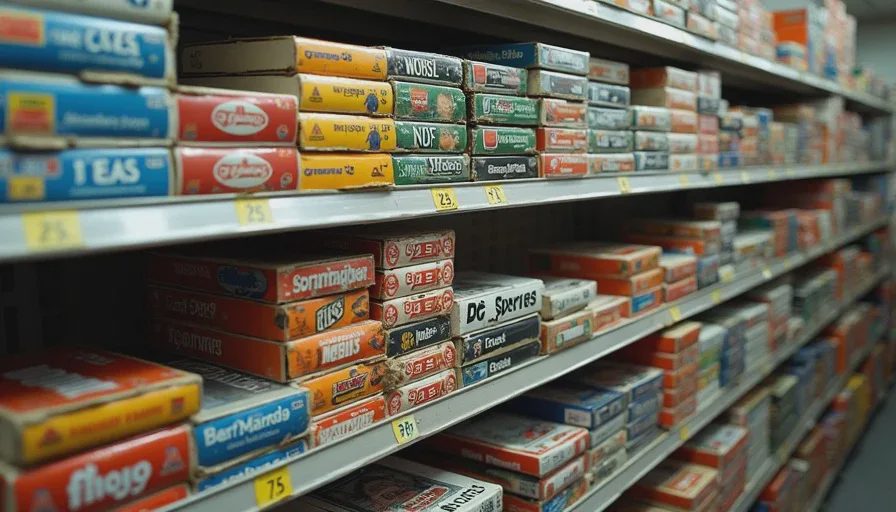
A shelf full of unwanted sports discs is a form of evidence. It shows which design and publishing strategies produce objects that do not retain secondhand desire. The annual reset, the roster updates, the sense that last year’s version is already wrong—those features worked as marketing. They also produced a permanent surplus. When I walk the aisles, that surplus is a reminder that not every game was built to be returned to.
The contrast with the games this site usually writes about is deliberate. A complete copy of a mid-tier adventure or a well-kept strategy guide still feels like a find. A stack of annual sports titles feels like the background condition of the store. Both are part of the same circulation system. Only one of them tends to leave handwritten notes or incomplete save files that invite a second play.
The Drive Between Stores
The noticing happens on the roads as much as on the shelves. Between towns I keep the legal pad in the passenger seat and write the store name and the rough count of sports games versus everything else. The counts are never scientific. They are enough to confirm the pattern. The pattern is consistent enough that it has become part of the geography of these loops.
I drafted the first notes for this piece in a booth after a loop that produced three usable story-driven discs and approximately two dozen sports titles I left behind. The coffee was the usual. The question at the top of the page was not “Why are these bad?” The question was “What does their permanent presence say about the system that produced them?”
The surplus also changes how I read the rest of the shelf. When twenty football titles sit untouched, the single complete mid-tier adventure next to them looks different. It was not printed in the same volume. It did not expire on an annual calendar. Someone kept it long enough for it to reach this store, and no one has taken it yet. That gap between high-volume residual and low-volume residual is part of what the loop teaches. I do not need to play the sports games to learn from them. Their permanent presence is the data.
On the drive between towns I sometimes count the ratio out loud for the legal pad: sports versus everything else. The numbers are rough. They are consistent enough that I stopped being surprised. The system that produced those discs was optimized for the living-room cycle of one season. The thrift system that receives them has no such cycle. It simply holds what remains. The holding is the story, and it is still legible on every Saturday shelf I check.
An Ordinary Archive of Obsolescence
Most of these games will stay on the shelves until they are discarded or sent to another store. That is their second life: to mark the places where annualized design and high print runs meet the limits of secondhand desire. I do not need to play them to learn from them. Their volume is the lesson.
Some games don’t age well. Some just wait for you to catch up. The sports games I keep finding have already finished aging. They are not waiting. They are simply still here, in numbers that make the rarer titles stand out more clearly when they appear. That contrast is one of the quiet services the thrift circuit still provides. The loop continues. The shelves remain full of the games no one wants. The story they tell is still legible.