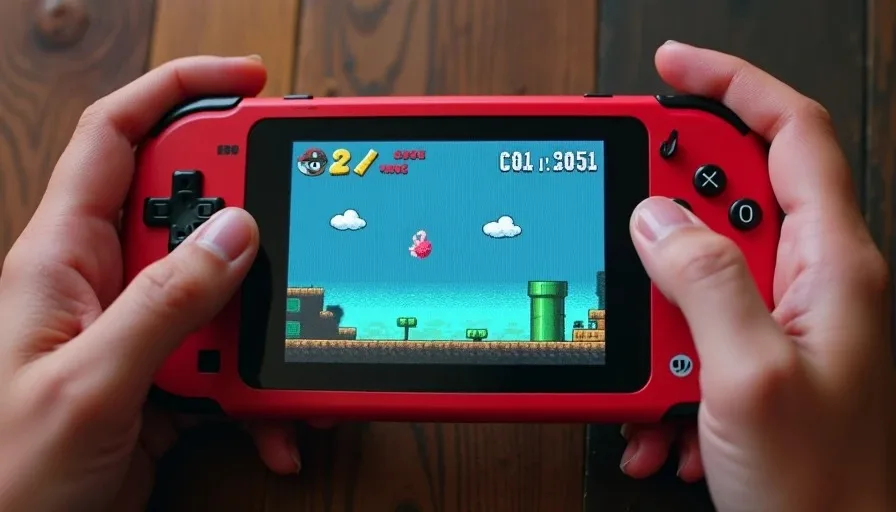
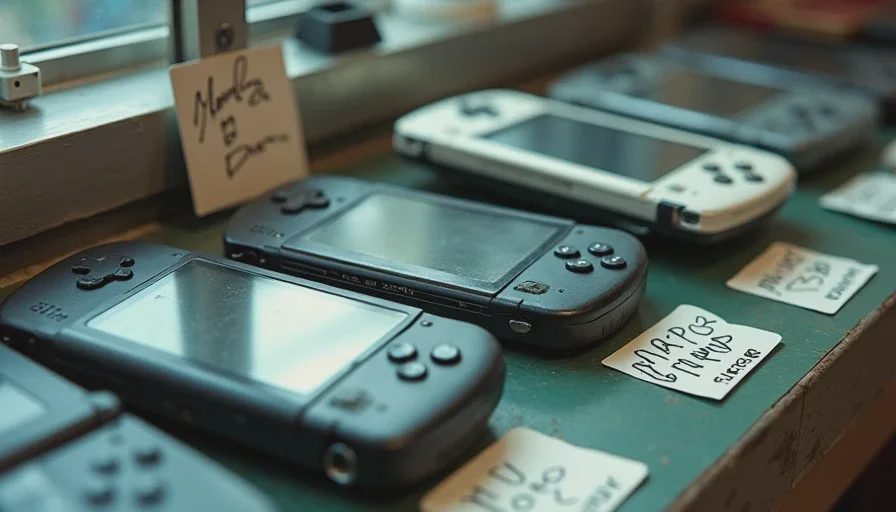
The pawn shop sits near the river in a town smaller than Dubuque, the kind of place where the same cases stay in the window for months. I stopped there on a Saturday loop looking for discs and left with a different lesson: the portable systems on the shelf—old DS units, early PSPs, a Game Boy Advance SP with a cracked hinge—were telling a clearer story about residual use than the home-console games beside them.
Portable consoles age differently in the secondhand circuit. They are smaller, easier to lose, easier to damage, and more likely to have been carried. Their presence or absence on a pawn-shop shelf is a record of how people actually lived with them.
What the Shelf Showed
Home-console discs can sit unplayed for years and still look complete. Portables show wear. The scuffs on a DS hinge, the missing stylus, the battery cover held with tape—these are evidence of pockets, backpacks, and car rides. When a portable still appears in a pawn shop, it has already survived a more physical life than most living-room systems.
A Working Snapshot
Object | Typical Condition in the Shop | What It Suggests |
|---|---|---|
DS / 3DS family | Hinges worn, screens cloudy, styli missing | Heavy portable use, then abandonment |
PSP / Vita | Faceplates scratched, battery issues | Carried, then left when support ended |
GBA / SP | Shells yellowed or cracked, labels worn | Long pocket life, then thrift/pawn |
Home-console discs | Often cleaner, cases intact | Less physical travel, residual shelf life |
Controllers | Missing or mismatched | Separated from systems early |
The table is a reminder that form factor shapes afterlife. Portables leave a different kind of residue—more intimate, more damaged, more clearly the result of being taken places.
Why the Pawn Shop, Not Only the Thrift
Thrift stores in the region hold more discs than hardware. Pawn shops hold more hardware that still has a chance of working. The difference matters. A disc without a system is a promise. A portable with a working screen is a complete, if diminished, experience. The river-town shop still had both, which is rarer than it used to be.
I did not buy a system that day. I wrote down the models, the visible damage, and the prices. The legal pad stayed in the car for the next stop. The lesson was not a bargain. It was the visible proof that portable games had been lived with in a way that home games often were not—and that the evidence of that living was still sitting under fluorescent lights a few hundred yards from the river.
The Drive Afterward
The road back toward Dubuque runs along the water for a stretch. I kept the notes on the passenger seat and thought about the difference between a game that stays on a shelf and a game that stays in a pocket. The second play of a portable title is often a re-encounter with that pocket life: the short sessions, the interrupted progress, the save files that lived in a backpack for months. The pawn-shop shelf had made that life visible again.
Portables show a different kind of residual life than home consoles. They were carried. They lived in pockets and backpacks and glove compartments. When they appear in a pawn shop with cracked hinges and missing styli, the damage is evidence of that carrying. Home-console discs can sit unplayed for years and still look complete. Portables rarely look complete after the same span. Their incompleteness is documentary.
I did not buy a system that day. I wrote down the models and the visible damage and the prices. The lesson was not a bargain. It was the visible proof that a form of play had lived closer to the body than the living-room systems, and that the evidence of that life was still sitting under fluorescent lights a few hundred yards from the river. The next loop will produce a different list. The same kind of wear will probably still be there.
Keeping the Physical Afterlife in View
Second Playfield is interested in residual media. Portables are one of the clearest remaining forms of that residue. They show wear. They show separation from their original owners. They show, in their cracked hinges and missing styli, that they were taken seriously enough to be carried and then left behind. A river-town pawn shop is one of the places where that story is still on display.
Some games don’t age well. Some just wait for you to catch up. The portables on that shelf were not waiting to be rediscovered as classics. They were waiting to be noticed as evidence—of use, of travel, of a form of play that lived closer to the body than the living-room systems ever did. The shop is still there. The river is still there. The next loop will produce a different list, and the same lesson will probably still be sitting under the same lights.