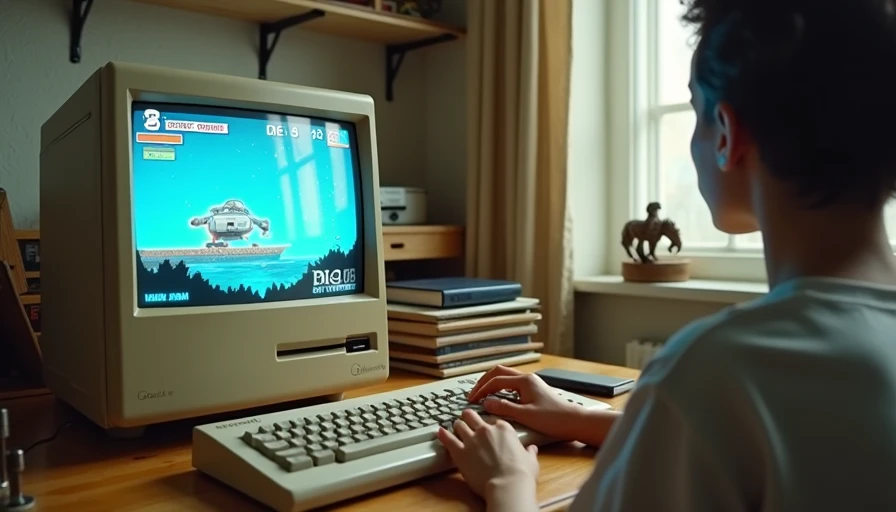
The first thing you remember about impossible mission c64 is probably the voice. “Another visitor. Stay awhile. Stay forever.” It arrives through the Commodore 64 speaker with a rough, haunted confidence, as if the machine has opened a door to a basement you were not meant to find. Decades later, that line still has a way of turning an ordinary evening into a small event.
This is not a game I would rush through now. I found my copy years ago in a thrift-store box with a sun-faded manual, two unrelated cassette tapes, and a receipt too faded to read. The disk looked tired. The game did not. It still offered that particular old-computer bargain: a simple objective, a hostile building, and no interest in making the player comfortable.
What made Impossible Mission feel different
Released for the Commodore 64 in the mid-1980s, impossible mission c64 places you in a sprawling underground complex controlled by the threatening Professor Elvin Atombender. The goal is direct enough: search rooms, collect puzzle pieces, and stop the professor before time runs out. The route is not direct at all.
The building is made from connected rooms filled with furniture, platforms, elevators, and patrolling robots. Searching a desk or cabinet can reveal a useful object, a worthless object, or a puzzle fragment whose importance only becomes clear later. The design turns ordinary movement into investigation. You are not simply crossing a level; you are learning the shape of a place.
That distinction matters. Many older platform games are remembered for speed, bright colors, or increasingly difficult stages. This one creates pressure through uncertainty. A room can look empty and still contain the one item you need. A robot can appear harmless until your timing is slightly wrong. Even the elevator system becomes part of the puzzle, because movement through the building requires attention rather than reflex alone.
The sound of a machine trying to speak
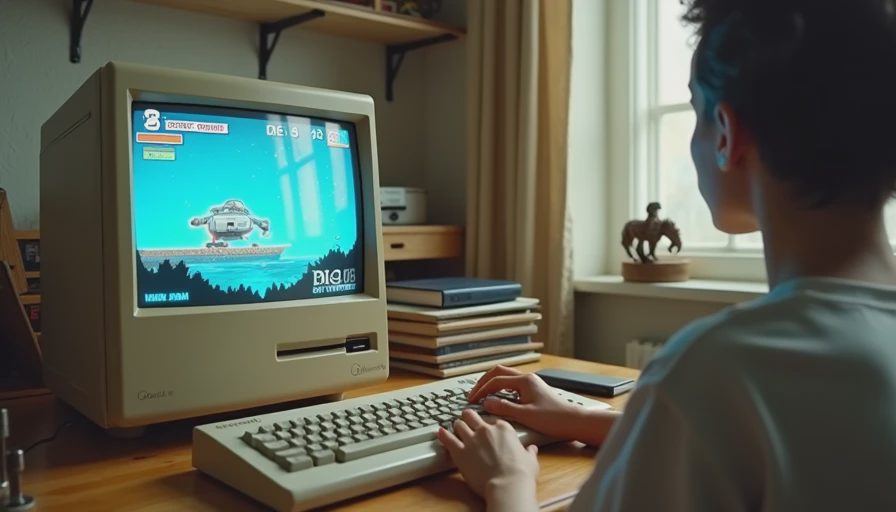
The famous speech in impossible mission c64 was astonishing in its original context. It is not smooth by modern standards, and that is exactly why it works. The voice sounds compressed, distant, and a little damaged. It carries the atmosphere of a cheap spy film playing on a television in the next room.
The rest of the audio is spare but purposeful. Footsteps, jumps, electronic effects, and the alarm-like tension of the game’s soundtrack leave plenty of room for imagination. The Commodore 64 is not presenting a fully realized cinematic world. It is giving you fragments and asking your mind to complete them.
That restraint gives the game its personality. A modern remake might explain the facility, show the professor’s face, and fill every corridor with musical cues. The original is more unsettling because it withholds so much. You are left with dark rooms, mechanical enemies, and a voice that sounds as though it has been waiting for you.
Searching is the real game
The central pleasure of impossible mission c64 is not defeating enemies. It is searching carefully. You move through a room, inspect furniture, test a jump, and remember what you saw. Some objects help you reach another area. Others are pieces of the final puzzle. The game rewards a notebook, a pencil, and the willingness to make a second pass.
That can sound slow to players trained by modern checkpoints and clear objective markers. For me, it feels closer to working through an old paper maze. In the library, I still see people make notes in the margins of donated puzzle books because holding an answer in your own handwriting feels different from looking it up. The same is true here. When you finally understand the building, the knowledge belongs to you.
The puzzle pieces also give exploration a longer memory. You are not collecting coins for a score that disappears at the end of the stage. You are assembling information. A failed run can still teach you where an elevator leads, which robot pattern is dangerous, or which room deserves another search.
Why the difficulty still has a point
Impossible mission c64 is difficult, but its difficulty is not entirely about punishment. The time limit creates urgency, while the limited lives create caution. You learn to stop making careless jumps because a mistake costs more than a few seconds. You begin to read the movement of robots instead of charging through them.
Some friction remains genuinely old-fashioned. The controls can feel stiff, and the collision rules take practice. A missed platform may send you back into a situation you thought you had already solved. There is no modern safety net waiting after every successful discovery. If you are tired, the game can feel less like a challenge and more like a locked door.
Still, the resistance serves the mood. The facility should not feel friendly. It should feel like a place built by someone who expected intruders and planned accordingly. The best sessions are not the ones where you dominate the game. They are the ones where you gradually become less lost.
Playing it now without pretending it is new
A current replay of impossible mission c64 benefits from patience and the right expectations. Do not approach it as a short action game you can finish between larger releases. Give it an evening, a notebook, and a willingness to restart. The original disk version can be awkward to access, so modern players often use a compatible emulator, a legal digital collection, or original hardware with a carefully maintained disk setup.
The goal is not to recreate every detail of a childhood afternoon. That memory is already doing its own work. Instead, notice what the game actually offers. Its rooms are small, but they encourage a large mental map. Its story is thin, but the voice gives the building a strange emotional temperature. Its controls are dated, but the search-and-recall loop remains unusually clear.
I would also recommend playing with the sound on. The speech is the doorway, and the quiet after it is part of the experience. With a controller or keyboard that feels comfortable, the game becomes less of a historical exhibit and more of a compact exercise in attention.
What impossible mission c64 leaves behind
The lasting achievement of impossible mission c64 is its sense of place. The underground complex is not just a series of screens. It becomes a location you remember: the room where you lost a life, the elevator that never seemed to arrive in time, the cabinet you searched twice because you were certain you had missed something.
Some games don’t age well. Some just wait for you to catch up. This one waited for me until I had less patience for empty spectacle and more appreciation for games that trust memory. It does not need a remake to justify itself. It needs a quiet hour and a player willing to look closely.
If you approach impossible mission c64 expecting modern convenience, you will find plenty to resist. If you approach it as a small, tense machine from another era, it still has a pulse. The professor’s voice rises from the speaker, the robots begin their patrol, and the old building opens one room at a time.