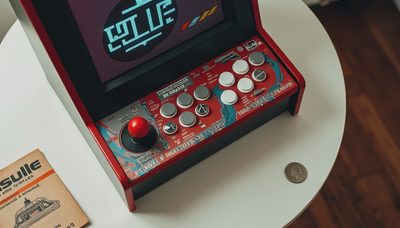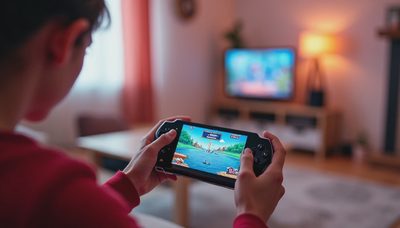
There is a particular kind of afternoon reserved for the ps2 midway arcade collections. The room is quiet, the television has a soft gray glow, and a scratched game case sits beside a controller that still feels familiar in the hands. You are not looking for a hundred-hour adventure. You are looking for the short, bright shock of a game that once lived behind a pizza counter or in the corner of a bowling alley.
On PlayStation 2, Midway gathered much of its arcade history into the Midway Arcade Treasures series. These compilations are imperfect time capsules, but they remain one of the easiest ways to experience games such as Joust, Defender, Robotron: 2084, Gauntlet, Rampage, and Spy Hunter without tracking down original cabinets. Some games don’t age well. Some just wait for you to catch up.
What the PS2 collections actually offer
The first Midway Arcade Treasures is the obvious place to begin. It centers on early arcade titles, including fixed-screen action, twitchy shooters, maze games, and several games built around a high-score chase rather than a traditional ending. The second and third volumes broaden the shelf, bringing in more racing, sports, fighting, and later arcade material. The exact lineup differs by volume, so the cover matters when shopping used.
That distinction is important. A listing described casually as ps2 midway arcade might refer to any of the three Midway Arcade Treasures releases, rather than one single game. Midway Arcade Treasures 2 is especially appealing if your memories lean toward Spy Hunter, Mortal Kombat, NARC, or other games with a heavier early-1990s feel. The first volume has a more primitive, electrical personality, where every dot and blinking enemy seems to be fighting for room on the screen.
The PS2 versions are not museum-perfect reproductions. They are practical ports designed for a living room, with menus, save features, and collections that let you move between games quickly. That convenience changes the rhythm. In an arcade, you might have spent your last quarter on one more attempt. At home, you can fail at Defender, try Joust, and return to Defender before the coffee cools.
The games that still have a pulse
Joust remains strangely readable. The goal is simple, the controls are immediate, and the floating platforms create a kind of airborne traffic problem that becomes tense before you notice it happening. It does not need a tutorial. You understand the whole argument within thirty seconds: flap better, land higher, and do not let the other rider get the advantage.
Robotron: 2084 is harsher but even more modern in its design. Moving and shooting with separate directions gives it a frantic two-stick logic, and the screen fills with danger quickly. It is the kind of game that makes a modern player sit forward, not because the graphics are impressive, but because the rules are so clean. Every mistake feels like yours.
Gauntlet offers a different pleasure. Its four-player arcade structure is less mysterious, built around keys, food, enemies, and the steady need to keep moving. With friends on a couch, it can still produce the old arguments over treasure and health. Alone, it becomes a slower walk through a maze whose repetition is either comforting or exhausting, depending on the evening.
Rampage is less elegant, but its cartoon destruction has survived because it understands the appeal of knocking down a building one floor at a time. The ps2 midway arcade version cannot recreate the noise of a crowded arcade, but it preserves the basic physical joke. You are not saving the city. You are making a mess of it, then eating a window.
Where the living-room version feels dated
The biggest adjustment is control. Arcade cabinets used joysticks, trackballs, steering wheels, light guns, and unusual button layouts. The PS2 controller translates those ideas into a familiar gamepad, sometimes successfully and sometimes with a little friction. Robotron works well because its twin-direction concept maps naturally enough. A driving game can feel less convincing when a small analog stick replaces a wide arcade wheel.
The display is another part of the experience. On a modern flat-screen television, old games can look brutally plain. Pixel edges become sharp, backgrounds reveal their emptiness, and animation that once looked lively can seem stiff. A small CRT television, if you happen to find one at a thrift store or tucked in a basement, often gives these games a kinder presentation. The blur is not a defect. It is part of the memory.
This is also why the ps2 midway arcade releases are better approached as historical objects than definitive editions. They show what publishers thought was worth preserving at the time, not everything fans might want today. Some arcade favorites are absent, and individual emulation quality varies. The set is a doorway, not the whole building.
Buying a used copy without overthinking it
Used prices usually depend on the specific volume, condition, and whether a seller recognizes the collection's appeal. You can often find ordinary loose copies at reasonable prices, while complete cases with manuals cost more. A scratched disc is not automatically dead, but heavy circular marks deserve caution. If possible, inspect the underside under a bright lamp and ask whether the seller has tested the game.
For a first purchase, choose the volume that matches the games you remember rather than buying all three immediately. Someone nostalgic for early Williams-style arcade play should start with the first Midway Arcade Treasures. Someone remembering Spy Hunter, Mortal Kombat, or later cabinet design may be happier with the second collection. A ten-minute look at the back cover can prevent a disappointing trip home.
The PS2 hardware itself deserves a little care. Keep the console level, clean dust from the vents, and use a memory card that still saves reliably. There is no reward for turning a simple evening with Joust into an hour of troubleshooting. Old media asks for patience, but not needless ceremony.
Why these compilations matter now
The ps2 midway arcade experience has value because it makes old games available without pretending they are something else. These are not sprawling remakes with cinematic introductions. They are compact machines built around repetition, timing, and the small embarrassment of seeing your initials disappear from the high-score table.
Playing them as an adult changes the scale of the memory. As a kid, a game like Defender could seem impossibly fast and almost hostile. Now, the appeal might be the sound of its rules clicking into place. You notice how much design fits into a handful of buttons. You also notice how often the arcade expected you to lose, because losing was how the machine kept the line moving.
That is the quiet pleasure of ps2 midway arcade collections. They do not demand that you recreate 1983 perfectly. They ask you to sit down for twenty minutes and see what remains after the context has fallen away. Sometimes the answer is a masterpiece. Sometimes it is a noisy curiosity with one excellent sound effect. Both kinds of discovery belong in the same used game case.
A good way to spend one evening
Start with one game you remember and one you do not. Give each ten minutes without looking up a guide or a ranking. Then switch to a multiplayer title, even if you are playing alone, and pay attention to the design meant for a crowded room. Write down the game that made you want one more attempt. That is usually the real keeper.
The best ps2 midway arcade sessions do not feel like homework. They feel like finding an old receipt in a jacket pocket and remembering the whole errand around it: the parking lot, the weather, the neon near the entrance, and the quarter held between two fingers. The collection may be sitting on a thrift-store shelf, waiting under a stack of louder games. Bring it home, let the disc spin, and see whether the old machine still knows your name.