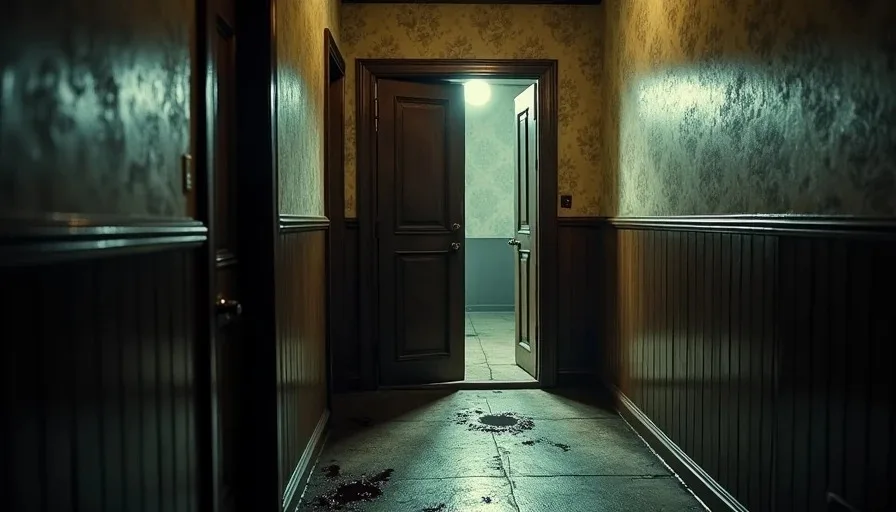
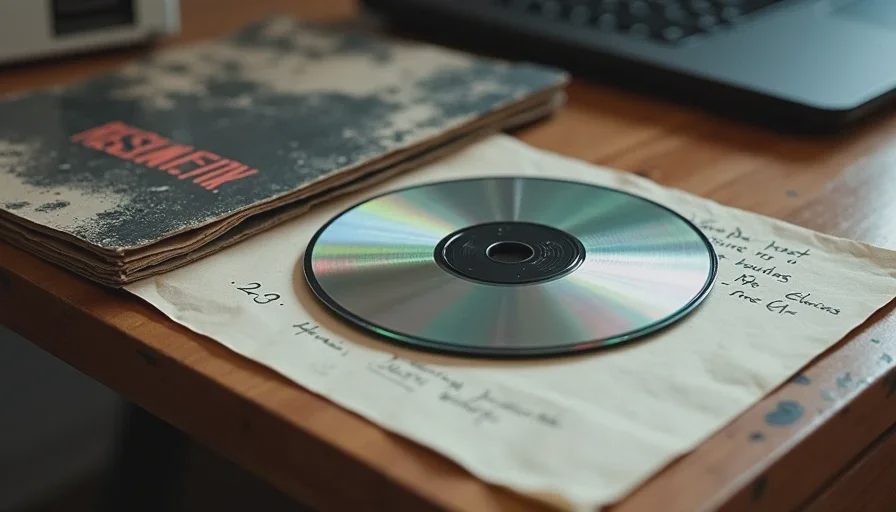
I replayed the original Resident Evil on a rainy Saturday in Dubuque, using a disc I found two towns over with someone else’s save file still on it. The question was not whether the game was once influential. The question was whether it still knows how to make a door feel dangerous. Twenty-eight years later, the answer is yes—and that answer says more about modern horror design than it does about nostalgia.
Some games don’t age well. Some just wait for you to catch up. Resident Evil (1996) belongs to the second group. Its tension does not come from jump scares or high production values. It comes from limited resources, fixed camera angles that refuse to reassure you, and a house that treats every corridor as a potential trap. Those constraints still work when you sit with them now.
What the Original Still Does That Newer Titles Often Avoid
Modern survival horror has more tools and usually less patience. It can render every shadow in high detail. It can stream audio cues with precision. What it frequently loses is the willingness to leave the player under-informed and under-equipped for long stretches. The 1996 game does not apologize for that scarcity. Ink ribbons are finite. Ammo is counted. The map is incomplete until you earn it. That scarcity is the design.
The Door as a Design Statement
The most famous example is still the simplest. Opening a door in the Spencer Mansion is never neutral. The camera cuts. The sound design holds. You do not know what is on the other side until the transition finishes. Modern games often replace that moment with a seamless load or a generous preview. The original refuses the courtesy. The refusal is the tension.
I noticed the same pattern in the save rooms. They are not merely safe. They are temporary. The typewriter sound is mechanical and final. You are always calculating whether the next stretch of hallway is worth the ribbon. That calculation still feels honest in 2026. Many newer titles replace it with automatic checkpoints that remove the weight of the decision.

Practical Differences That Survive the Years
Here is a working comparison I keep when thinking about why the original still holds:
Element | Resident Evil (1996) | Common Modern Approach |
|---|---|---|
Camera | Fixed, often unhelpful | Player-controlled or cinematic assist |
Resources | Strictly limited, visible scarcity | Generous or regenerative |
Information | Incomplete map, sparse notes | Detailed objectives, markers |
Safe spaces | Temporary, costly to use | Frequent automatic checkpoints |
Enemy pressure | Persistent, positional | Often scripted or density-scaled |
The table is not a ranking of quality. It is a reminder that tension is a design choice, not an automatic result of higher fidelity. The 1996 game makes that choice repeatedly and does not walk it back.
What Changes When You Are Older
Playing it again at thirty-eight is different from playing it at sixteen. The controls still feel deliberate rather than fluid. The voice acting is still stiff. Those surfaces have not improved. What has improved is the clarity of the underlying structure. The mansion is a puzzle of risk management. The story is secondary to the spatial logic. That logic still teaches something about how fear can be built from limits rather than spectacle.
I wrote the notes for this piece in a diner booth outside Platteville after the thrift run that produced the disc. The coffee was bad. The legal pad was the same one I use for every replay. The question at the top of the page was the same one I ask every older title: does this still work when the cultural conversation is gone? For Resident Evil, the answer is still yes.
Who This Replay Is For
If you want seamless modern controls and constant forward momentum, the original will frustrate you. If you want a game that still treats every closed door as a potential problem and every save as a calculated risk, it remains one of the clearest examples available. The tension is not nostalgic. It is structural. That is why it has waited.
I am not arguing that every modern horror game should copy fixed cameras or ink ribbons. I am arguing that the original’s willingness to leave the player uncertain and under-supplied is a lesson that still applies. When a new title replaces that uncertainty with reassurance, something essential is traded away. Resident Evil (1996) never made that trade. That is why, on a rainy Saturday in Iowa with a used disc and a half-finished save file, the doors still felt dangerous.