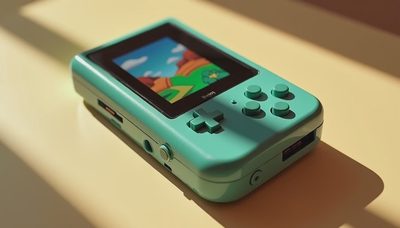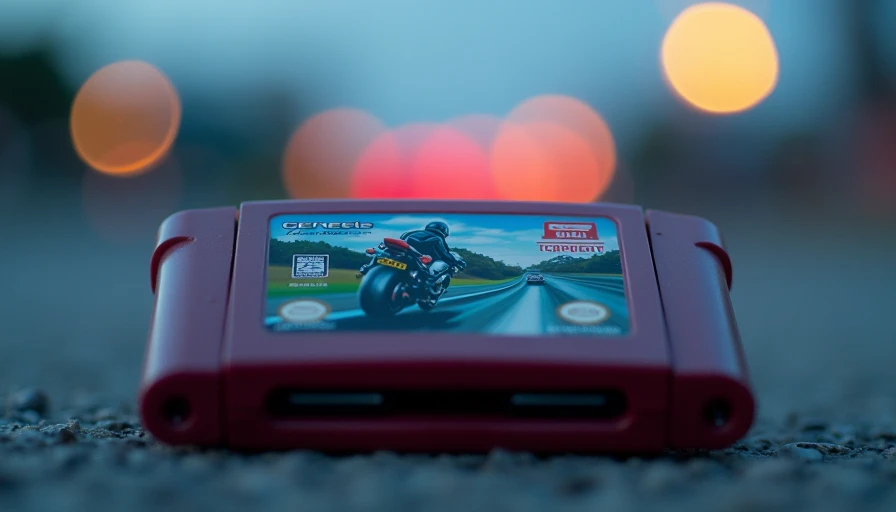
There are games you remember by their opening screen, and games you remember by the sound they made when the cartridge clicked into place. Road Rash II belongs to the second group. I first encountered it in the usual old-game way: a worn Genesis case, a thrift-store shelf, and a weekend with nowhere better to be. Road Rash II was not elegant, but it had a clear idea of fun. Get on a motorcycle, find a stretch of American road, and make sure the rider beside you regrets pulling alongside.
That simple idea still carries a little electricity. The game does not offer a giant world, a cinematic story, or a garage full of systems to study. It offers hills, traffic, rival riders, police, and a weapon swinging at the exact moment your friend is trying to pass. Some games don't age well. Some just wait for you to catch up.
What Road Rash II Actually Gives You
Released for the Sega Genesis in 1992, Road Rash II builds on the motorcycle combat racing formula established by its predecessor. You race through a series of courses, earn money, improve your bike, and move toward faster events. The structure is straightforward enough to understand after one race, but the road keeps adding pressure through traffic, sharp turns, rival attacks, and mistakes that send your rider tumbling onto the pavement.
The important detail is that this is not simply a racing game with a few weapons attached. Combat changes how you read the road. A rival in front of you is not just a driver to overtake. He is also a possible source of trouble, a moving obstacle, and sometimes the only reason you lose a lead you worked hard to build. A club, chain, or punch can buy space, but using it at the wrong time can leave you drifting toward a guardrail.
The Genesis hardware gives the game a rough, compressed look that suits its subject. The roads are bright, the backgrounds scroll with purpose, and the riders have enough animation to make every collision feel personal. It is not realistic. It is a cartoon memory of reckless riding, built from pixels and a controller with a stubborn directional pad.
The Road Feels Better Than the Destination
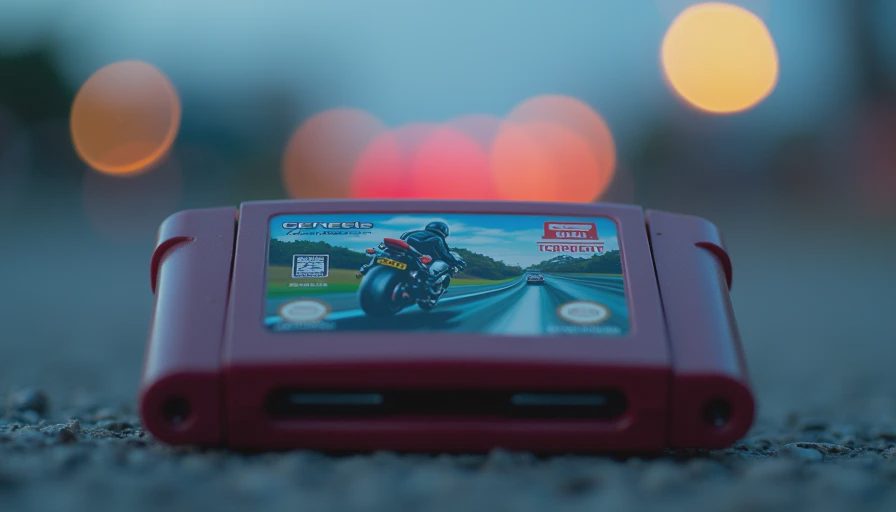
What keeps Road Rash II interesting is the road itself. Its courses are not elaborate by modern standards, yet they have a readable rhythm. One route might give you a long straightaway for an attack, followed by a bend where traffic turns a clean pass into a panic maneuver. Another seems manageable until a hill hides an oncoming car. You learn these details through failure, not through a tutorial window.
That learning process feels different now. In 1992, losing a race could feel like a personal insult, especially when the computer rider knocked you into a ditch near the finish. Today, the setback is easier to appreciate. The game is asking you to notice patterns, manage speed, and decide whether a risky attack is worth the few seconds it might save. There is strategy under the noise, even if the strategy is usually delivered by a metal chain to the shoulder.
Road Rash II also understands the pleasure of a modest upgrade. Earning enough cash for a better motorcycle changes the game without turning it into a spreadsheet. Acceleration, top speed, and handling become meaningful because you feel each difference immediately. A faster bike is exciting, but it can also make a familiar corner harder to survive. The best rides are not always the most expensive ones.
Why the Combat Still Works
The fighting is crude, but it has excellent timing. You do not need a dozen moves or a complicated combo system. You need to know when a rival is close, when a swing is likely to connect, and when protecting your own balance matters more than landing a hit. That narrow set of choices gives every overtake a little drama.
Road Rash II is especially good when two players share the same room. Split-screen racing turns the game into a small social machine. Someone gets ahead, someone starts laughing, someone clips a car, and suddenly the race matters more than the prize money. The screen may be divided, but the conversation fills the room. In an age of online matchmaking, that kind of immediate irritation and celebration feels almost old-fashioned.
The weapons also give the game its personality. A fist is basic, a chain is useful, and a heavier club can make a pass feel like a declaration. The impact is exaggerated, but that exaggeration is the point. Road Rash II never asks you to believe this is a documentary about motorcycle safety. It asks you to enjoy the absurdity of turning a country highway into a rolling grudge match.
The Parts That Feel Old
A patient replay should not confuse affection with forgiveness. Road Rash II can be unforgiving in ways that feel less like challenge and more like limited information. Traffic may appear with little warning, collision results can seem inconsistent, and a single mistake can erase a promising run. The controls are responsive, but they do not always communicate why a rider has gone down.
The progression can also feel thin after several sessions. Once the novelty of the weapons and upgrades settles, you are repeating a familiar loop across related courses. There is no deep career drama waiting at the end, and the game has little interest in explaining its world. A modern player used to constant rewards might wonder what all the road work is building toward.
Still, these limits are easier to accept when you treat the game as a compact arcade experience rather than an unfinished simulation. A race takes only a few minutes. The system is clear. You can play for an hour, put the controller down, and remember one specific wreck rather than a list of chores completed by percentage.
Finding It Today
Playing Road Rash II now is easiest through legitimate retro collections, original Genesis hardware, or a well-maintained cartridge and console setup. The original controller is part of the experience, particularly because the game depends on quick direction changes and simple, forceful inputs. Modern displays can make the image look harsher, so a basic upscaler or a television with a decent retro mode can help without turning the game into something it was never meant to be.
A used copy can be found at prices that vary widely with the box, manual, and cartridge condition. The cartridge alone is usually the practical purchase. If you find a complete copy in a thrift store or game shop, look for label wear, damaged contacts, and a case that has spent too long in a hot attic. A manual with handwritten passwords or bike notes is not a defect to me. It is evidence that someone once took the races seriously.
The best modern setup is probably simple: one Genesis-style controller, a short session, and a second player if you can arrange it. Do not begin by demanding perfect handling. Give the roads a few races to reintroduce their timing.
Does Road Rash II Still Deserve a Ride?
Yes, with one important qualification. Road Rash II is worth revisiting if you want a direct, compact game with a strong sense of place and a little harmless cruelty. It is less rewarding if you expect a modern campaign, smooth racing physics, or a large collection of modes. Its appeal sits in the space between racing and playground combat, where a good line through a corner can be ruined by one laughing friend and a badly timed swing.
My favorite way to play it is on a quiet afternoon, preferably after finding some old physical media at a thrift store and before the day becomes crowded with errands. The game benefits from that kind of attention. It does not need nostalgia to carry it, but nostalgia opens the door. Once inside, the responsive controls, memorable crashes, and quick two-player tension do enough of the work themselves.
Road Rash II is not a perfect relic. It is a worn jacket with a useful pocket, a cassette case with a cracked hinge, a backroad you still recognize after the signs have changed. The ride is rough, brief, and occasionally unfair. That is also why it remains memorable. You do not return for a polished world. You return for the moment when the road opens, a rival pulls beside you, and the old Genesis suddenly feels wide awake.