There is a particular kind of old game discovery that happens under bad fluorescent lights. You find a cartridge in a thrift-store glass case, read the label twice, and realize the thing you remember was not quite the thing you thought it was. That is the story of splatterhouse nes, a phrase usually used for a game that never received a conventional North American NES release. What exists instead is Splatterhouse: Wanpaku Graffiti, a Japan-only Famicom title that borrows the arcade series' violence, masks, monsters, and haunted-house mood, then squeezes them into something much stranger and more playful.
That distinction matters, but it should not end the conversation. The Famicom game is an interesting little artifact from the period when publishers adapted arcade properties with loose rules and surprising confidence. It is not the arcade Splatterhouse in miniature. It is its own odd back-road cousin.
What Splatterhouse NES actually is
When people search for splatterhouse nes, they are often looking for a cartridge-based Nintendo version of the 1988 Namco arcade beat-em-up. In the United States, no official NES edition of that arcade game was released. The game commonly associated with the search is Splatterhouse: Wanpaku Graffiti, released for the Japanese Family Computer in 1989.
Wanpaku Graffiti keeps the broad ingredients: Rick, the hockey-mask-inspired Terror Mask, haunted interiors, creatures from the other side, and a steady march toward a final confrontation. The presentation, however, is compact and cartoonish. Characters have oversized heads, enemy designs are softened into comic shapes, and the blood-soaked arcade atmosphere becomes something closer to a horror-themed Saturday morning show.
That does not make it a cheap imitation. The Famicom hardware demanded compromises, and the developers responded with a distinct visual language. The game feels less like a failed port than a licensed remix made by people who understood that a home console audience wanted something different from an arcade crowd.

How Splatterhouse NES plays today
The most useful way to approach splatterhouse nes is as a short, focused action game rather than a lost masterpiece. The side-scrolling stages are built around simple movement, jumping, attacks, and enemy patterns that become readable after a few attempts. You are not managing a large inventory or exploring a broad map. The pleasure comes from learning the timing of a room, recognizing where an enemy appears, and making it through with enough health to see the next strange scene.
The controls can feel stiff by modern standards. Rick does not move with the flexible responsiveness of a later 16-bit action hero, and some jumps require a little more commitment than you expect. Yet that stiffness is part of the period texture. Like many late-1980s console games, Wanpaku Graffiti asks you to stop improvising and start observing.
The difficulty is not uniformly cruel, but it has the familiar rhythm of a game designed to make a limited amount of content last. A missed jump or careless collision can send you back through a section you had already solved. On original hardware, that repetition might have felt like an obstacle. Today, with save states available through emulation or modern cartridge hardware, it becomes closer to a series of small practice sessions.
The thrift-store version of the memory
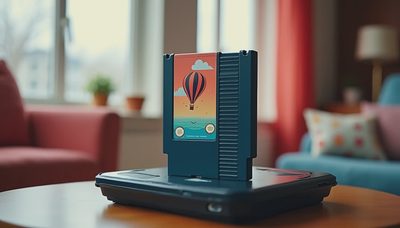
A loose Famicom cartridge tells a different story than a boxed American NES game. The label might be sun-faded, the plastic slightly yellowed, and the back marked with a handwritten price from a shop that no longer exists. Finding splatterhouse nes material in the wild is uncommon enough that the object itself can become more memorable than the play session.
Collectors should be careful with listings that describe an unlicensed reproduction as an original NES release. Some sellers use the familiar search phrase because it attracts buyers who remember the arcade game. Look for clear photographs of the cartridge, board information when available, and an honest description of the Japanese release history. A reproduction can still be a practical way to play, but it should not be priced like a verified original.
The language barrier is manageable. The game is action-focused, and its essential ideas are communicated through movement, enemies, short scenes, and visual cues. You do not need to read Japanese to understand the basic goal. You only need enough patience to accept that this is an unusual branch of the Splatterhouse family tree.
Why Splatterhouse NES still has a pulse
Splatterhouse nes remains interesting because it captures a moment when horror games did not have to be solemn. Before atmospheric survival horror became the dominant language, monster games could be loud, silly, colorful, and a little grotesque. Wanpaku Graffiti looks at the grim arcade source material and decides to wear fake teeth instead of a funeral suit.
That tonal shift gives the game an unexpected warmth. The enemies are not simply targets; many of them are tiny visual jokes. The backgrounds suggest haunted mansions and supernatural danger, but the scale keeps everything from becoming oppressive. It is the kind of game that might have sat beside a stack of rental tapes in a video store, waiting for a kid to choose it because the cover looked dangerous.
The game also benefits from being brief. An evening with it does not require a long campaign commitment, a spreadsheet, or a second monitor full of instructions. You can play a stage, make coffee, and return later without losing the thread. For adults whose free time arrives in uneven pieces, that matters more than a massive map.
Finding and playing Splatterhouse NES now
If you want to experience splatterhouse nes today, the cleanest route is to seek out Splatterhouse: Wanpaku Graffiti by its actual title. Original Famicom copies can be expensive depending on condition, packaging, and seller confidence. A reproduction cartridge is less historically valuable but often easier to use with compatible hardware. Emulation is another practical option, provided you obtain game files through lawful means and use equipment that supports the original display style.
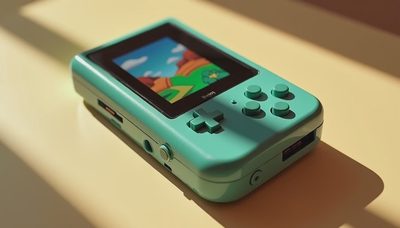
A modern HDTV can make the game look harsher than expected. Pixel art designed for an older composite television often benefits from a low-latency display, a good upscaler, or a handheld device with a thoughtful retro mode. You do not need an elaborate setup, though. Even a basic emulator with integer scaling and a modest scanline filter can preserve the chunky shapes better than a blurry full-screen stretch.
Avoid approaching the game as a replacement for the arcade original or the later PC Engine and TurboGrafx-16 versions. Those games have different pacing, violence, controls, and ambitions. The Famicom title is valuable precisely because it is a sideways interpretation, not because it wins a direct comparison.
Should you spend time with it?
The answer is yes, if you enjoy compact curiosities and can separate historical importance from personal pleasure. Splatterhouse NES is not the hidden answer to every question about the series. It will not suddenly make the old arcade design feel modern, and its controls can test the patience of anyone accustomed to generous checkpoints and instant movement.
What it offers is more modest and, in some ways, more durable: a peculiar adaptation with a clear personality. It shows how a frightening arcade property could be softened without being completely emptied out. It carries the fingerprints of a particular hardware generation, a particular market, and a time when regional releases could create whole pockets of game history that American players never saw.
Some games do not age well. Some just wait for you to catch up. Splatterhouse nes belongs in the second group, though not because it was secretly perfect. It waits as an artifact, a curiosity, and a short evening of strange monsters, stiff jumps, and bright cartoon horror. If you find it on a shelf, do not mistake its oddness for a flaw. That oddness is the reason to turn the cartridge over and keep looking.