There is a particular sound to an old NES starting up: the click of the power switch, the brief electronic chirp, and then a picture that seems smaller than you remembered. nes balloon fight begins with almost nothing. A blue sky, a few clouds, a little character floating under two balloons, and a screen waiting to punish careless movement. Yet that simplicity has held up better than plenty of busier games from the same shelf.
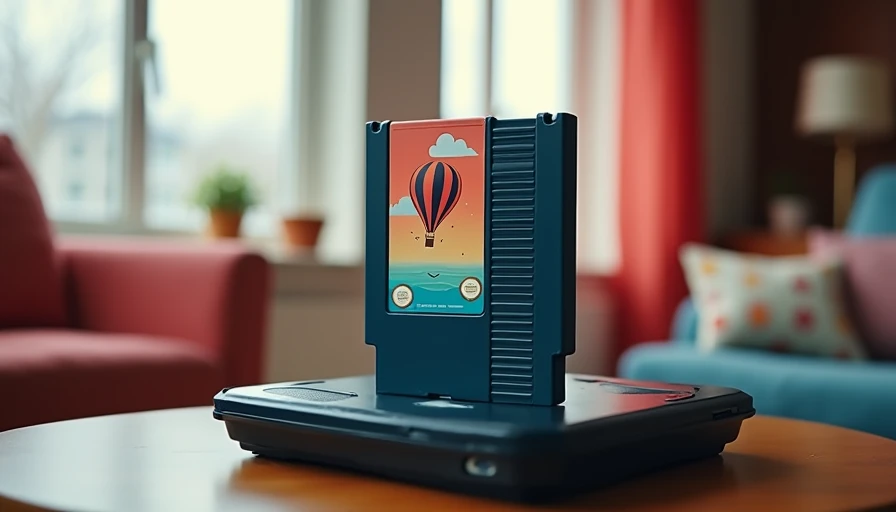
I found my own copy years ago in a thrift-store bin between a sports title and a cartridge with no label. The plastic was gray with dust, and somebody had written a price on the back in fading marker. I brought it home expecting a quick nostalgia visit. Instead, I kept playing until the coffee beside me went cold. That is the odd pull of this game: it asks for only a few minutes, then quietly takes the whole evening.
What makes nes balloon fight work
The basic idea is immediately clear. You guide a balloon-equipped character through the air, tapping the button to flap upward and trying to pop opponents before they pop you. A rival can lose one balloon and keep flying, which creates a useful little moment of pressure. You are not simply aiming at a target. You are deciding whether to make another pass, retreat, or risk drifting into an enemy from the wrong angle.
The controls are loose, but not careless. Your character carries momentum, and every tap changes your position without giving you complete command of it. On an NES controller, that can feel awkward for the first few minutes. Then the awkwardness becomes the point. You learn to anticipate the arc rather than chase it. The best players seem less like pilots than people nudging a paper kite through a windy parking lot.
The screen is also doing more work than its bright colors suggest. Clouds and hazards shape your route, while enemies often arrive from just outside your comfortable line of sight. A good run depends on reading the whole space. You are watching the opponent, the ceiling, the water below, and the direction your own body is already moving.
The two-player memory is the real prize
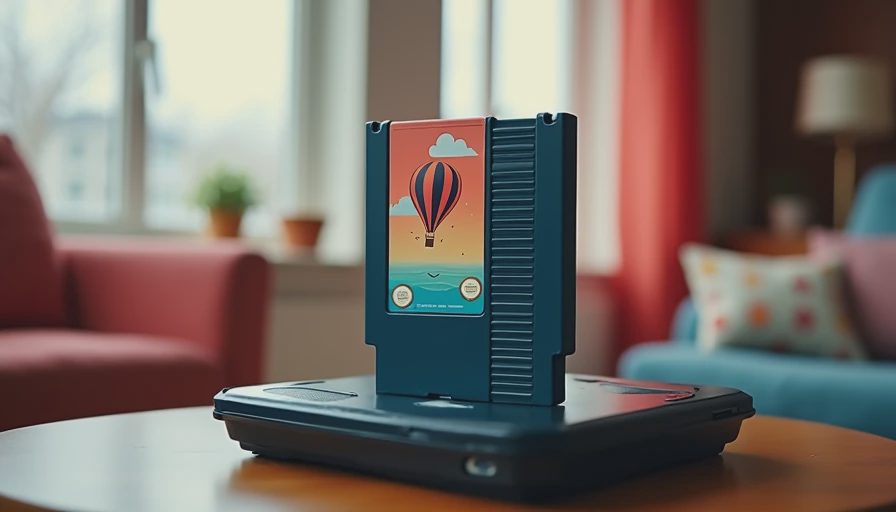
For many players, nes balloon fight is remembered less as a solo challenge than as something passed across a living-room carpet. Two-player mode turns the simple controls into a conversation. One person rises too quickly, another drifts into danger, and suddenly both players are laughing at a mistake neither intended to make.
That friction is important. Modern multiplayer often teaches players exactly what they can do, then gives them clean arenas and readable feedback. This cartridge offers a narrower set of tools and lets personality fill the space. One player may circle cautiously near the top of the screen. Another may dive at every possible opening. Neither style is automatically correct, because the game is built around small changes in timing.
There is a physical memory attached to that kind of play. You remember the controller cable stretching across the room. You remember the television warming the corner of the furniture. You remember somebody insisting they had not bumped your arm. The match itself might last less than five minutes, but the argument around it could survive until dinner.
The competitive mode has limitations, especially if you are expecting a deep arcade system. Stages repeat their basic ideas, and the challenge can become familiar once your reactions settle in. Still, the lack of excess is part of its charm. nes balloon fight never pretends to be a grand adventure. It is a small machine for producing tension between two people.
Balloon Trip and the value of a slower pace
The single-player Balloon Trip mode changes the mood. Instead of hunting opponents, you guide your character through a scrolling field while avoiding sparks and collecting balloons. The pace is calmer, but concentration matters more than aggression. A careless tap can send you into danger, and the forward movement means you cannot simply wait for a perfect opening.
This mode feels surprisingly modern in one respect: it understands that a game can be satisfying without constantly adding new systems. The pleasure comes from making a clean sequence of decisions. Rise here. Drop there. Leave that balloon alone. Wait for the hazard to pass. It is almost meditative until one small mistake breaks the rhythm.
Playing it now, I notice how much room the game leaves for silence. There are no long story scenes, unlock screens, achievement banners, or tutorials explaining what I already know. The game starts, the rules become visible, and the rest is practice. For an adult player with a full workweek and a backlog that feels more like an obligation than a pleasure, that directness can be refreshing.
nes balloon fight is also a reminder that difficulty does not need to be theatrical. It does not rely on a dramatic boss or a swelling soundtrack to announce failure. You simply miss a flap, collide with a spark, and understand what happened. The lesson is immediate enough to try again.

How it feels compared with other NES games
The obvious comparisons are games such as Joust, Balloon Fight's clear arcade ancestor, and Nintendo's own Excitebike or Ice Climber. All of them take a simple physical idea and build a complete game around it. Joust is heavier and more combative. Excitebike gives you stronger control over a machine. Ice Climber feels more deliberate and vertical. nes balloon fight sits somewhere between those temperaments, offering movement that is slippery but readable.
That slipperiness is why it can be divisive. If you want immediate precision, the controls may seem crude. If you enjoy learning a strange physical system, they become expressive. The difference often depends on your mood. After a long day, I do not always want a demanding action game, but I sometimes want ten minutes of focused irritation. This is excellent company for that particular feeling.
The presentation has aged gently. The character designs remain friendly without becoming overly cute, and the limited color palette gives the game a clean, almost toy-like appearance. The music is repetitive, but repetition suits a cartridge meant to be played in short bursts. Nothing is trying to impress you beyond the small pleasure of movement.
Should you play it today?
Yes, especially if you approach it as a compact arcade game rather than a lost masterpiece. nes balloon fight will not provide a long campaign, a rich story, or a modern progression loop. Its reward is more modest and, in some ways, more honest: you sit down, remember the controls, improve your timing, and leave with a few good moments.
The best way to revisit it is with another person nearby, even if that person has not played an NES game in years. Explain the button in one sentence, start a match, and let the confusion become part of the evening. If you are playing alone, Balloon Trip offers a gentler route into the same movement system. Give it fifteen minutes before deciding whether the controls feel wrong. They are not wrong; they are simply old-fashioned in a way that asks for patience.
Some games don’t age well. Some just wait for you to catch up. nes balloon fight belongs to the second group. It is a tiny cartridge with a short vocabulary, but that vocabulary remains expressive: rise, drift, hesitate, commit. Found in a thrift bin or loaded from an old collection, it still knows how to make a quiet room feel briefly competitive.